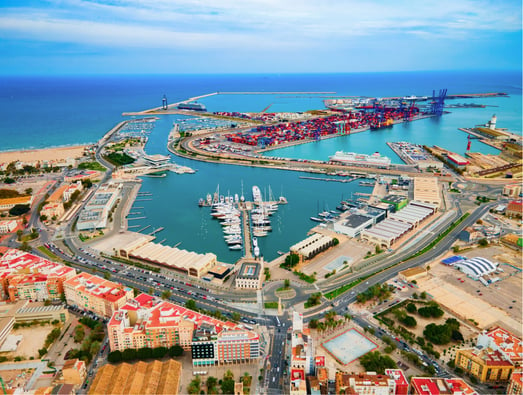
The good health of the Spanish economy benefits air and sea freight. In 2025, Spanish ports recorded a 2.7% growth in container traffic. Air cargo, meanwhile, jumped 7.2%. Significant investments are planned to support this development.
Maritime port traffic and air cargo traffic share a major dependence on international activity. In both of these modes, unlike road and rail transport, geography plays in Spain's favour. The existence of ports in the Mediterranean and the favourable position on the Suez Canal-Strait of Gibraltar corridor have enabled the development of transshipment and strong connectivity which constitutes a decisive commercial advantage. Proximity to North Africa is another advantage. Similarly, geography plays in favour of Madrid airport, which holds the leadership in Europe for freight between Europe and Latin America and now aspires to be a "bridge" to Asia.
Port traffic: resilience in the face of crises
In 2025, the traffic of Spanish commercial ports which are classified as being of general interest remained stable at 541 Mt (-0.2%), according to statistics published by Puertos del Estado, the public body overseeing ports which reports to the Ministry of Transport and Sustainable Mobility. This figure remains below the peak traffic reached in 2019 (552 Mt), which supports the idea that Spanish port traffic has reached a ceiling.
As in previous years, the overall figure for 2025 masks different trends depending on the traffic category:
Dry bulk cargo declined for the 3rd consecutive year. This is the consequence of the sharp decline in cereal imports (-18.4%, 15.1 Mt), which can be explained by a good harvest in Spain. Coal inputs also fell (-10.4%, 8.9 Mt).
Liquid bulk cargo saw a slight increase. Liquefied natural gas (LNG) traffic grew by 18.4% (17.1 Mt).
General cargo remained stable after the record reached in 2024. Container traffic declined (-1.4%, 190 Mt) while conventional traffic increased (+3.6%), reaching a new historical record (89 Mt).
Slowdown in growth in the container business
Container traffic from Spanish ports increased by 2.7% in 2025, reaching 18.6 million TEUs. The country retains its position as the European leader in cumulative container traffic, despite a marked slowdown compared to the 10.6% growth of the previous year. This overall erosion encompasses different dynamics depending on the two main categories of traffic:
The decline in transshipment
After recording a sharp increase in 2024, container transshipment has decreased slightly in 2025. In 2026, traffic increased again (+2.8% over 5 months), as shipping companies maintained their stopovers with minor adjustments.
The increase in import-export
Import and export container traffic recorded strong growth of 7.8% in 2025, enabling it to break a historical record by reaching 6.9 million tons. This market segment benefits from the dynamic growth of the Spanish economy as a whole, with GDP rising by 2.8% in 2025. It is of particular interest to large shipping companies (MSC, Maersk, Cosco, CMA CGM), which have invested in "on land" (terminals, rail freight, dry ports, etc.) and thus control the logistics chain (...)
Air transport: a new growth dynamic
The year 2024 was characterised by record highs for Spanish airports in terms of traffic for both passengers and goods. The figures for 2025 are consistent with the previous year's figures:
Passenger traffic. Despite economic and geopolitical difficulties (trade war, conflict in the Middle East, weak economic growth in Europe, etc.), the final figures for 2025 were slightly higher than the forecasts of AENA, the public company in charge of operating the 46 Spanish airports. With a growth of 3.9%, traffic reached 321.6 million passengers, a new all-time record. Spanish airports have fully benefited from the continued tourism boom.
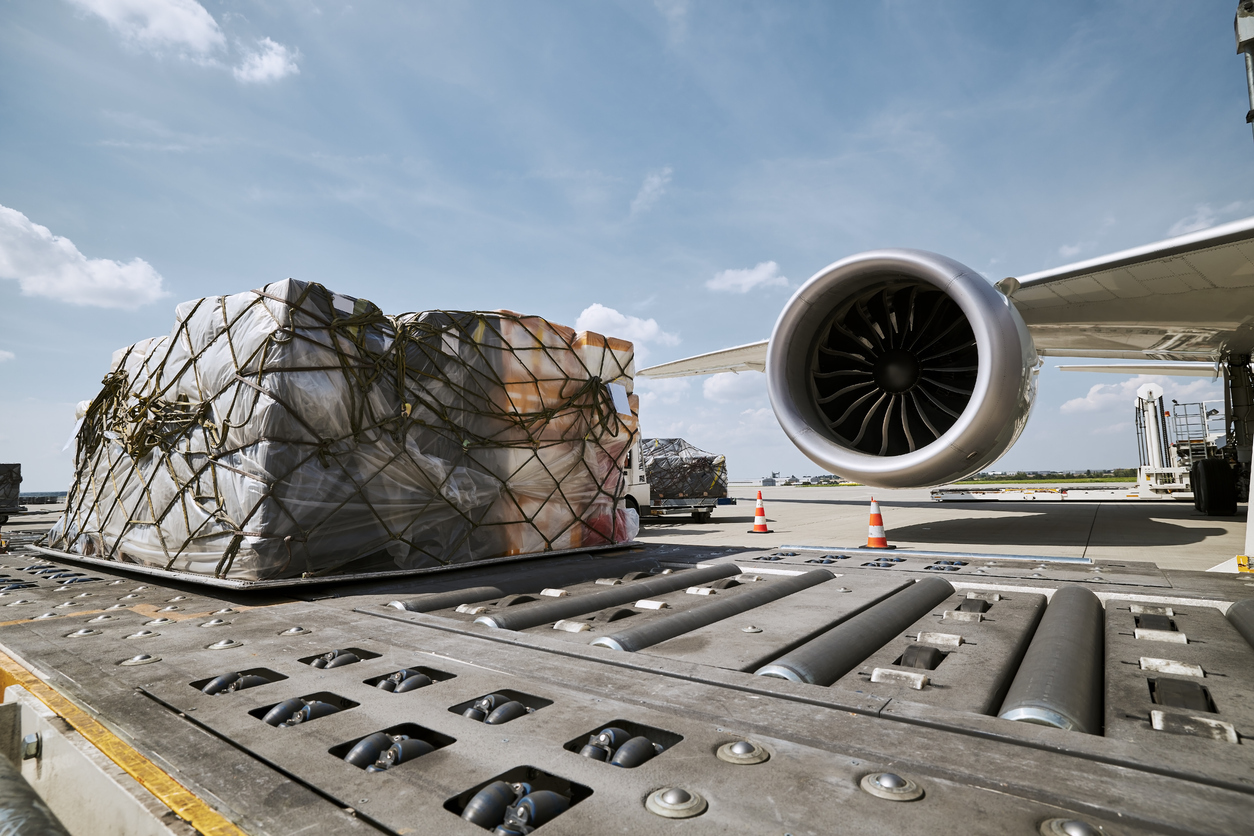
Airfreight Freight traffic reached 1.37 Mt, up 7.2% compared to 2024. This is a new all-time record. Over the period 2020-2025, the overall increase was +28.5%. The momentum was strong throughout the year with a notable acceleration at the end of the year (+10.5% in November and +10.9% in December). Madrid, Barcelona, Zaragoza and Vitoria accounted for 94.2% of total air cargo traffic in 2025.
The dynamism of Spanish air cargo has allowed the peninsula's airports to improve their position in the European rankings. In 2025, four of them were in the European top 35, according to the ranking established by ACI Europe, which includes Istanbul Airport: Madrid (8th), Barcelona (22nd), Zaragoza (26th) and Vitoria (35th)...